
For developers keen to explore Google's new generation of AI development tools, this week has certainly been a “gravity-defying” scare.
Google's AI-first development environment (IDE)Google Antigravity Since its release, with its ability to Gemini 3.1 and Claude The deep integration of cutting-edge models such as Opus 4.5 has quickly become a favorite of the developer community. However, a sudden wave of bans is sweeping the community. A large number of developers have reported on Reddit and Google AI developer forums that their Google accounts have been suddenly banned, and not only are they unable to log in to Antigravity, but they are also unable to log in to their Google accounts. Google AI Studio and other cloud services were also affected.
Cold on the screen 403 PERMISSION_DENIED 错误代码背后,实际上是 Google 针对 API 滥用行为的一次精准打击。这场风波的核心,在于开发者试图通过“反向代理”的方式,将 Antigravity 的高配额 OAuth 令牌(Token)“嫁接”到 OpenClaw、OpenCode 等第三方工具中,以规避使用限制。
This article will analyze the technical reasons for the ban, Google's security considerations, and provide a detailed technical guide to account recovery for affected users.
“Gravity Out of Control: The Beginning of a Wave of Bans
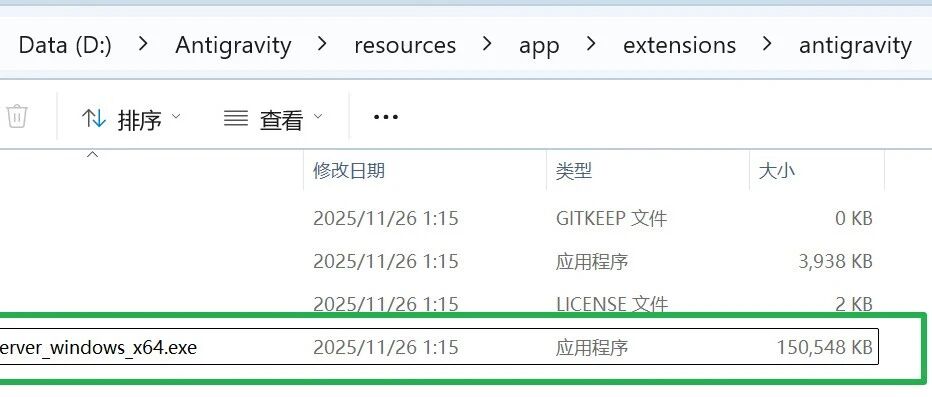
The cause of the incident can be traced back to Antigravity's unique quota mechanism. As an AI-native IDE built on the VS Code branch, Antigravity provides users with extremely generous model call quotas, including the Gemini 3 Pro 和 Claude Opus 4.5 (Thinking) Model.
In contrast, Google's official API service, or the standard Gemini Advanced subscription, has strict limits on the frequency of calls (Rate Limit) and the context window. In order to break these “shackles”, the open source community has developed a new API called opencode-antigravity-auth of the plug-in technology.
The logic of this technique is very straightforward but dangerous:
- Extraction Token: The user logs into Antigravity and extracts their OAuth 2.0 authentication token.
- False call: Inject that token into the OpenClaw(an autonomous AI agent tool) or OpenCode(third-party code assistant) in the
- Bypassing Restrictions: Third-party tools masquerading as Antigravity clients send requests to Google's servers to get free access to the advanced modeling and computational resources that Google reserves for its own IDEs.
This “shell-shopping” behavior quickly angered Google, and according to the community, the ban was not only imposed without warning, it was also enforced with unprecedented vigor - even by the Google AI Pro of paid subscribers will also experience immediate blocking as soon as the token is detected as being used abnormally.
Why would Google do this?
In addition to the obvious business benefits (users circumventing API billing), security issues are the root cause of Google's “hard hand”.
Back in the early days of Antigravity's release, security company Mindgard Antigravity's Trusted Workspace mechanism has been reported as potentially risky. If an attacker induces an IDE to execute code via a malicious Markdown link or repository configuration, a persistent backdoor could be planted.
When a user exports an OAuth token to a third-party tool, such as OpenClaw, they are effectively handing over the “vault key” to their Google account to an uncontrolled code environment. Once these third-party tools are tampered with or vulnerable, an attacker can use the token to perform arbitrary Google Cloud operations as the user without the user's knowledge.
As a result, Google characterizes such behavior as a “Terms of Service” violation ofCircumvention of security measuresTerms. Similar products such as Anthropic 的 Claude Code and AWS's Kiro Similar API call policies have also been tightened recently, demonstrating an industry trend of zero tolerance for “token abuse” by major vendors.
Error Characteristics Diagnostics
If you suspect that you have been “hit”, check to see if you are experiencing any of the following:
- IDE login failed: When starting Antigravity, the prompt
There was an unexpected issue setting up your account。 - API call rejection: See on the console or in the logs
403 PERMISSION_DENIEDconcomitantGemini has been disabled in this account for violation of Terms of ServiceThe specific description of the - Associated services are paralyzed: Unable to access Google AI Studio, even Google Cloud Platform (GCP) project creation permissions were recalled.
Tech Guide: How to Save a Banned Account
Although Google's bans appear to be permanent, the community's experience in the field suggests that they are usually “soft bans” based on an automated detection system. As long as the offending connection is severed and good faith compliance is demonstrated, there is a very good chance that the account will be unblocked.
The following are proven recovery steps:
Step 1: Cut off OAuth authorization completely (server-side reset)
First, all sessions marked as “abusive” must be logged off on Google's servers. This is the equivalent of telling Google, “I've disconnected the offending tool.”
- interviews Google Account Management Page: myaccount.google.com.
- Navigate to [Data and privacy] (Data & Privacy) or [Security] (Security) tab.
- locate [Third-party applications with access to your account (Third-party apps with account access) module.
- Sift through the list and look for the name Antigravity、Google Cloud SDK、Google OAuth or an explicit OpenClaw/OpenCode Entry.
- Click on these entries and select [Access removed] (Remove Access).
Step 2: Clear local “polluted” caches (client-side cleaning)
Simply disconnecting the server is not enough. If old, marked token files remain on the local computer, Antigravity automatically tries to reuse these “dirty” tokens when you try to log in again, which triggers the security alert again, resulting in an extended block.
Depending on your operating system, please completely delete the configuration files in the following paths:
- Windows users:
- removing
%APPDATA%\AntigravityFolder. - removing
%APPDATA%\OpenClaw或%APPDATA%\.clawdbotFolder.
- removing
- macOS / Linux users:
- Open a terminal and execute the delete command (please proceed with caution):
rm -rf ~/.antigravity
rm -rf ~/.config/antigravity
rm -rf ~/.clawdbot
- Open a terminal and execute the delete command (please proceed with caution):
Step 3: Enforce a “safe cooling-off period”
This is the most critical, but also the most patience-testing step.Google's Abuse Detection System usually has a cool-down timer.
- Suggested cooldown: (say the) least 24 hoursThe safest way to do this is to 96 hours(4 days).
- Operational contraindications: During the cooling period, theAbsolutely not.Attempt to log in to Antigravity or use the associated API. any failed login attempts may reset the cooldown countdown.
Step 4: Submit a complaint email (if cooling is not effective)
If the account is not restored after 96 hours, manual intervention will be required. When writing an email, please be sure to discard emotional outbursts and remain professional and sincere. Reviewers handle a large number of work orders every day, and clear, polite requests are more likely to be approved.
- Recipient:
gemini-code-assist-user-feedback@google.com - Sample email headers:
Appeal for Account Reinstatement - [你的 Google 账号] - 403 Permission Denied Issue - Mail content elements:
- Affected Accounts: Explicitly list the Gmail address.
- Error Log: included herewith
403 PERMISSION_DENIEDA screenshot of the full error of the - Sincere explanation: Acknowledging the use of a third-party tool (such as OpenClaw) for testing suggests that there was no awareness of a violation of the OAuth Usage Agreement.
- Rectification measures: Statement that all third-party licenses have been removed and local caches have been cleared.
- Recovery request: Politely request that access to Antigravity and related AI services be restored.
Conclusion: back on track
in the wake of Gemini 3.1 is nearing release, Google is planning to combine Antigravity with the Google AI Studio Make deeper connections to build a closed-loop ecosystem from prototyping to production deployment. This means that permission management will only get stricter in the future.
For developers, the use of open source tools to explore the boundaries of technology is not wrong, but in the ecological garden of commercial giants, “reverse proxy” and “token reuse” is always dancing on the edge of the red line. For account security and long-term development stability, returning to the official tool chain may be the only feasible option.