


OpenClaw (formerly Clawdbot/Moltbot) is a free and fully open-source autonomous artificial intelligence (AI Agent) system that performs complex tasks directly on the user's local device using a large language model. Unlike traditional AIs that can only engage in text-based conversations, OpenClaw is designed to be an “AI that can actually do things for you”. It uses WhatsApp, Telegram, Slack, Discord and other mainstream chat software as its main user interface, you just need to send commands like sending messages to your friends, and it can call up tools in the background to complete the operation. The system is highly open and model-agnostic, supporting access to various mainstream big models such as Claude, OpenAI GPT or DeepSeek. With its unique “Skills” plugin system, OpenClaw can directly clean your inbox, manage your calendar, book flights, control your browser, and even execute advanced terminal scripts. With long term contextual memory across sessions and native control of devices, OpenClaw demonstrates the potential of a new generation of native, all-encompassing digital personal assistants.
Function List
- Platform-wide IM integration interface: Ditch the cumbersome dedicated client and support Telegram, WhatsApp, Slack, Discord, Signal, WeChat, iMessage, and dozens of other commonly used chat software as the interaction portal for AI.
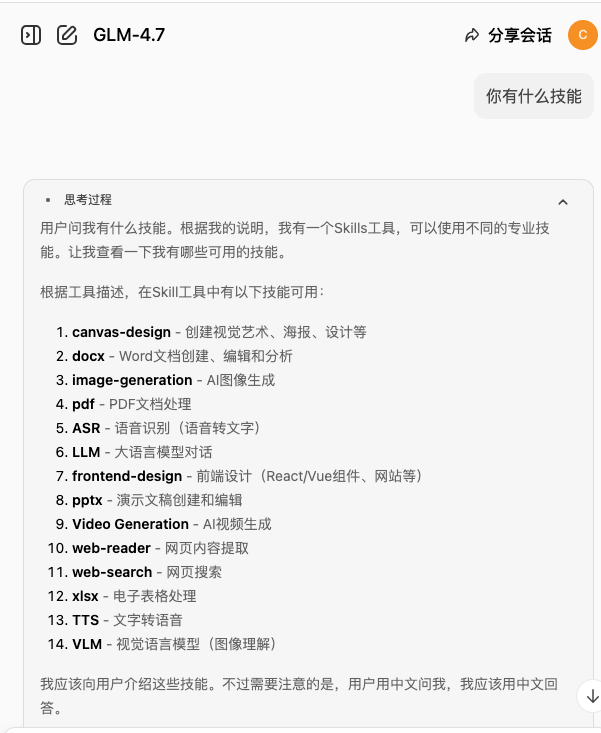
- An open and infinitely expandable “Skills” system.: By means of a simple
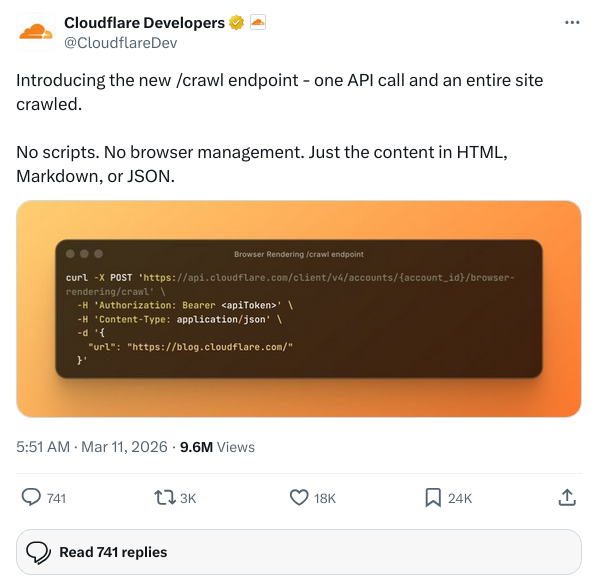
SKILL.mdmetadata file, users can easily write or install third-party toolkits to equip AI with new capabilities such as cleaning up emails, automating texting, crawling web pages, and more. - Large Language Model Irrelevance and Localized Operations: The core gateway is deployed on user-owned devices and supports on-demand access to cloud-based model APIs such as OpenAI, Anthropic, DeepSeek, etc., or connection to locally deployed open source models.
- Device-native level of system control permissions: Breaking out of the web sandbox, AI can directly run local terminal scripts (Shell Commands), read and write system files, and automate the browser interface.
- Cross-session persistent long-term memory: The system securely stores the user's interaction history and configuration data locally, enabling true contextual memory, and the AI adapts to and remembers the user's preferences and habits as usage grows.
- Automated workflows and background timed tasks: Built-in Cron-based timed task execution engine supports AI to run workflows silently in the background, such as automatically summarizing news and pushing it to the chat window every morning.
- Rich Media Processing and Speech Recognition Pipeline: Native support for sending and receiving images, audio, and video, and built-in voice transcription hooks that allow you to directly control the device by sending voice messages.
Using Help
I. Understanding OpenClaw's Operation Mechanisms and Preliminaries
OpenClaw is a highly customizable, open source AI intelligence control platform that runs on the user's local device. It is not an off-the-shelf website in the cloud, but rather a “gateway” to intelligence. Because it needs to access your files and execute system commands directly, you need to deploy it on your personal computer or server.
- Operating System Support: Perfectly supports macOS, Linux platforms. If you are using Windows, you must pass the WSL2(Windows Subsystem for Linux, Ubuntu distribution recommended) to ensure compatibility of the underlying scripting ecology. The project also provides experimental iOS and Android nodes.
- environmental dependencies: Ensure that you have installed Node.js (recommended v18 or above stable version) and configured the corresponding package manager, the system is fully compatible with the
npm、pnpm和bun。
II. Kernel Installation and Initialization Wizard (OpenClaw Onboard)
In order to lower the barrier to use, the OpenClaw team has developed an extremely user-friendly visual terminal configuration wizard, which allows you to complete complex configurations by simply following the prompts with a few keystrokes:
- Start the installation wizard:
Open a terminal (Terminal or WSL2 command line), enter the following command and press Enter to start the System Wizard:npx openclaw onboard - Configure the gateway control plane (Gateway):
The wizard will first guide you through setting up the Gateway, which is the central hub of OpenClaw and handles all session isolation, heartbeat detection (Presence), background task scheduling (Cron), and web request hooks (Webhooks). Keep the default configuration and set up the Gateway locally (e.g.localhost:3000) startup can be done. - Create a data workspace:
The system creates an exclusive on your local hard diskWorkspaceDirectory. This is the “home” of AI, where all long-lasting memory databases, installed plug-ins, custom configurations, and generated temporary files are securely encrypted and stored in this directory, enabling absolute data privacy autonomy.
Third, access to the big model “brain” and set up communication channels (Channels)
OpenClaw itself is an executive torso with no intelligence; you need to connect a “brain” to it and assign a “mouth and ears” to it.
- Configuring the Large Model Provider (LLM API):
Select your preferred underlying bigram model with the guidance of the wizard. It is fully compatible with all kinds of cutting-edge big models, and you can enter OpenAI (GPT-4o), Anthropic (Claude 3.5 Sonnet) or DeepSeek These credentials are only stored in your local environment variables. - Connecting Chat Software Channel(Take Telegram for example):
OpenClaw doesn't require you to download a dedicated app, it just fits right into your existing life.- Open Telegram on your phone and search for the official Robot Father
@BotFather。 - Send it a
/newbotcommand, follow the prompts to create a name for your personal assistant, and when it's done you'll get a unique string ofBot Token。 - Paste this token into OpenClaw's configuration wizard. A long connection is automatically established, and from that moment on, the Telegram account becomes your dedicated private AI concierge portal. You can also access WhatsApp or Slack through the wizard.
- Open Telegram on your phone and search for the official Robot Father
IV. Installation and development of a “skills” ecosystem
OpenClaw can be called “action-oriented AI”, and its core weapon is the “skill system”.
- How skills work:
Each skill in theWorkspacein a separate folder, the core of which is a copy of the internalSKILL.mdDocumentation. This document defines the metadata of the skill, the cue word restrictions, and declares “how to use this tool” to the larger model. - Installation of community skills:
You can clone off-the-shelf skill packs directly from GitHub or Molthub (community center). For example, “Gmail Manager” or “Calendar Scheduler”. Just drag and drop the corresponding folder into your Workspace for a hot update to take effect. - Let the AI write its own skills:
In Telegram, you can send voice or text directly to it saying, “Write me a skill: automatically scan my downloads folder every night at 11pm, move old files over 500MB to a backup disk, and send me a cleanup report.” OpenClaw will invoke programming capabilities on its own in the background to write code, generateSKILL.mdand test it locally, and in a few minutes, this new skill is yours permanently.
V. Cross-platform daily interactions and immersive experiences
Once the environment is set up, daily use is as smooth as chatting with a real person:
- Automated office instructions:“Look up all the project documents I received in Slack this morning, extract the data into a Markdown-formatted table, and auto-reply to the sender.”
- Complex mission planning:“Help me look at flights to Seattle this weekend. Compare prices and help me generate an itinerary, save it to a local memo, and set my alarm ahead of time to wake me up at 8 a.m. tomorrow morning.”
- Code and Terminal Assistance:“I seem to have an error in that Node project on my desktop, could you please go into that directory, read the error logs and analyze the cause, and directly help me to change the code and re-run the test.”
When the system receives a command, it will report its thought process, invoked terminal commands and feedback results in the form of a “Streaming” message in the chat box, so that you can see its behavior at a glance.
VI. Must-see security and privacy configuration recommendations
Handing over control of your local computer to AI carries significant security risks and it is highly recommended that the following guidelines are followed:
- The principle of zero confidence: OpenClaw is directly connected to a real instant messaging panel. Be sure to treat all “public group chats” or “private messages from external strangers” as untrustworthy inputs, and turn on “whitelisted users only” mode in your configuration.
- Precautionary Tip Injections: Don't let AI read malicious web pages or public emails from unknown sources, which could cause it to be hijacked by hidden malicious instructions that could mistakenly delete your local files.
- Isolated Operating Environment: Try to place the runtime environment in a virtual machine, Docker container, or local sub-account with restricted privileges, and avoid AI directly gaining high-level administrator (Root) privileges on the host.
application scenario
- Super Personal Digital Assistant & Scheduler
On your commute to work, send a single voice message via WhatsApp from your car and have OpenClaw running on your home computer automatically open your Gmail and clean up spam, pull up the day's meeting schedule and sync it to your phone's calendar, and make a lunch reservation at your favorite restaurant. All this is done silently with a personalized natural language background. - Automated cross-media content creation and distribution
Creators can let OpenClaw regularly crawl designated tech news RSS feeds or popular YouTube videos in the background, distill core insights, and then use local scripts to generate richly illustrated analytical articles that are automatically distributed to Twitter, Telegram channels, and personal blogs every day at 3:00 p.m., realizing the automation of a full set of self-publishing operations. - The “Strong Connection” Brain Hub of the Smart Home
By installing OpenClaw with the control skills of a smart home (such as Home Assistant), it becomes the master of your home. You can say, “Adjust the air conditioning temperature and close the curtains according to tonight's cooling conditions,” and the AI will analyze the weather information and give precise control commands that are far smarter than traditional preset scene patterns. - Fully automated code operations and local development assistance
A developer can directly tweet OpenClaw in the project's dedicated Discord channel and order it to pull the latest Git commits from the local server and perform a packaged build. If a system error occurs during the build, the AI can automatically scan the console logs to locate the bug, and either suggest a modification or attempt to fix it automatically.
QA
- Is OpenClaw free to use?
The platform itself is 100% free and open source (using the MIT protocol), so you can download it and deploy it on your device as you wish. However, since it is model-agnostic, you will need to pay a token fee for the big cloud models (e.g. APIs provided by OpenAI, Anthropic) that you call when processing your natural language instructions. If you are connecting to a locally running open source model, it is completely free. - How is it fundamentally different from the web version of ChatGPT or Claude?
While web-based AI assistants run in a sandbox in the cloud and can only talk or generate code, OpenClaw is an “intelligence engine” deployed on your own device. OpenClaw is an “intelligence engine” deployed on your own device, with read/write access to local terminals and files, and can not only talk, but actually do things on your computer, such as automate browsers, execute terminal commands, manage your local files, and more. - Is it safe to use AI when given such high system privileges?
The official documentation clearly states that “there is no such thing as an absolutely secure setup”. Since it has high privileges and can even run scripts, it can be extremely dangerous if it is not properly configured or loaded with skill packs containing malicious code. Users are advised not to easily expose public ports, to strictly limit the whitelist of chat recipients, and to run it in an isolated system environment (e.g. a virtual machine or container) if possible. - Why did the program change its name so often from Clawdbot to Moltbot and finally to OpenClaw?
The popular open source project was originally named Clawdbot by developer Peter Steinberger as a tribute to the Anthropic A tribute to the company's Claude model. As the project exploded in popularity and became the fastest growing project on GitHub, it received a complaint from Anthropic warning of trademark infringement. It was briefly renamed Moltbot (in keeping with the lobster theme), and then a few days later it was renamed OpenClaw, as it is known today, because the name wasn't catchy enough.