

Integration of the LlamaEdge API server into existing AI agent frameworks (e.g. LangChain, AutoGPT) requires attention to the following points:
- Configuration Parameter Replacement::
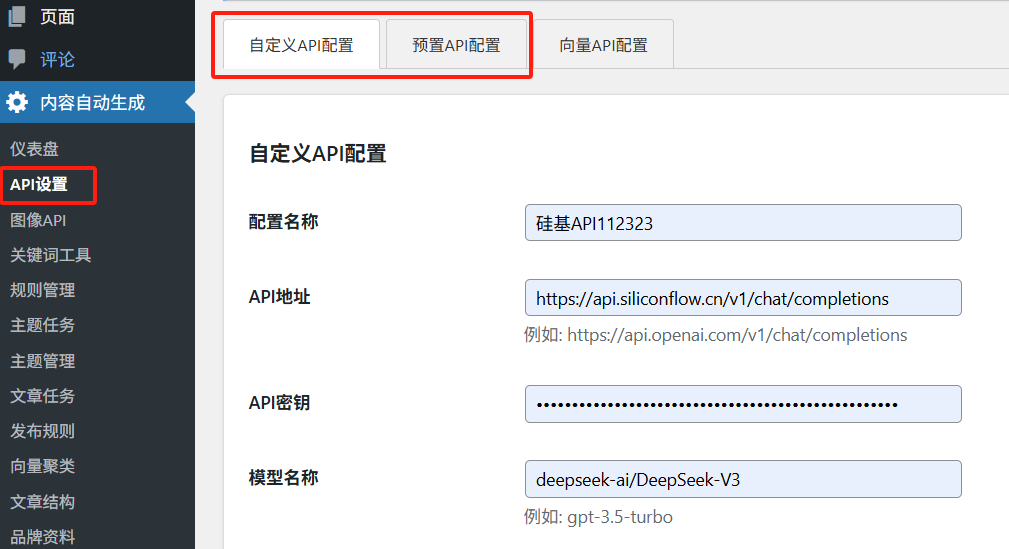
- Change the base_url of the original OpenAI to a local address (http://localhost:8080/v1).
- Specify the model name as a locally loaded model (e.g. DeepSeek-R1-Distill-Llama-8B).
- Functional Adaptation Validation::
- Tests whether the response to the chat/completions interface satisfies the proxy's parsing logic.
- If you use the embedding feature, make sure that the vector dimension of the embedding model (e.g. nomic-embed-text-v1.5) is compatible with the framework.
- Performance Tuning::
- Adjust the -ctx-size and -batch-size parameters to match the agent's context length requirements.
- Monitor throughput with -log-stat and upgrade hardware if necessary.
Typical Integration Cases: Modify the initialization parameters of the OpenAI module in LangChain:
from langchain.llms import OpenAI
llm = OpenAI(openai_api_base="http://localhost:8080/v1", model_name="DeepSeek-R1-Distill-Llama-8B")
The project documentation provides specific tutorials with frameworks such as CrewAI, Semantic Kernel, etc., and developers can refer to the examples to quickly implement alternatives.
This answer comes from the articleLlamaEdge: the quickest way to run and fine-tune LLM locallyThe
May not be reproduced without permission:AI productivity tools " How to integrate LlamaEdge API server with other AI agent frameworks?
















 English
  简体中文
简体中文  日本語
日本語  Deutsch
  Português do Brasil