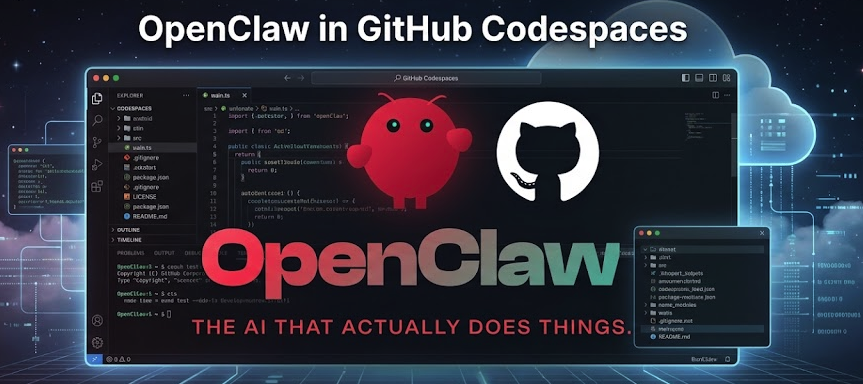



OpenClaw Zero Token OpenClaw is a derivative of the famous open-source project OpenClaw, whose core goal is to eliminate the high cost of API Token fees and achieve completely free access to all major AI platforms. By taking over the debugging port of the user's local Chrome browser through Playwright's browser automation technology, the tool can automatically capture and persist the user's authentication credentials (Cookie and Bearer Token) after manually logging in on the web side of ChatGPT, Claude, DeepSeek, Kimi, and Tongyiqianqi, etc. After obtaining the credentials, the system will set up a Gateway in the local area. After obtaining the credentials, the system will build a Gateway gateway locally to encapsulate these free conversation channels, which can only be used on the webpage, into a standard interface, so that OpenClaw intelligences can invoke large model computing power at zero cost and unlimited (limited by the official webpage flow restriction). At the same time, it perfectly inherits OpenClaw's powerful local Tool Calling mechanism and the characteristic AskOnce multi-model concurrent questioning function, which is a hardcore gateway tool that allows developers to have a fully automated local AI assistant for free.
Function List
- API Token-Free Aggregation CallsIt completely breaks the billing limitations of the official developer interface, and natively supports free drivers for more than ten top domestic and international models such as DeepSeek, ChatGPT, Claude, Gemini, Tongyiqianqian, Kimi, Doubao, Grok, Wisdom Spectrum Qingyin, Manus, and so on.
- Native Tool Calling Support: AI can execute autonomously through system-level XML command injection and streaming parsing in a completely free web call mode.
exec(run command),read_file(read file),list_dir(traversing the catalog),browser(Web automation),apply_patch(code modification) and other system operations. - AskOnce Multi-model Concurrent Questioning: Provides the unique feature of one-question-multiple-answers. By entering the prompt word once, the system can send a question to multiple configured AI models at the same time (e.g., simultaneously send a question to DeepSeek and Claude) to initiate a query and get and compare the response results of each model side-by-side on the same screen.
- Local voucher security takeoverChrome CDP (Chrome DevTools Protocol) is used to senselessly intercept and extract Authorization Header, cookies and other authentication credentials are only saved in local files and never uploaded to ensure the absolute security of account data.
- Out-of-the-box Web UI and CLI/TUIThe project comes with a multi-terminal interactive interface that allows users to issue commands directly from the terminal command line, as well as access a local web interface for intuitive dialog and workflow management.
- Security Sandboxing and Directory Restrictions: Supports strict setting of the Workspace directory for intelligences in configuration files, ensuring that AI tool calls only take effect within authorized folder boundaries, preventing malicious code or large model hallucinations from corrupting core system files.
Using Help
OpenClaw Zero Token is designed to provide you with a completely free alternative to API Token by means of local browser login. In order to ensure the smooth operation of the service, please follow the detailed steps below to complete the project's front-end environment and core configuration.
I. Pre-environmental preparation
To run the project, you need to have a basic development environment on your computer: make sure you have Node.js (recommended version 22.12.0 and above), the package manager pnpm (9.0.0 and above), and Git installed, and you must have the latest version of Google Chrome installed on your local computer, as the project will rely on Chrome for forensic capture. If you are using Windows, it is highly recommended to run it under WSL2 (Windows Subsystem for Linux).
II. Project Compilation and Dependency Installation
Open the system terminal, select the appropriate directory and clone the project source code:
git clone https://github.com/linuxhsj/openclaw-zero-token.git
Go to the project root directory:
cd openclaw-zero-token
Install all required dependencies:
pnpm install
Compile the project static files and UI interface:
pnpm build
pnpm ui:build
III. Capture credentials and gateway configuration (core steps)
This is a key part of eliminating the API Token fee, and the system needs to extract your web-side login status through the browser debugging mode.
First, start Chrome in debug mode. Run the provided helper script in the terminal:
./start-chrome-debug.sh
Note: This script automatically opens a Chrome window (on port 9222), so keep this terminal window and browser open at all times and do not close them.
In the pop-up browser, manually visit the official website of the AI platform you want to use (e.g., visit https://chat.deepseek.com/) and complete the usual code scanning or account password login.
Once you have logged in, open a new terminal window (keeping the debug terminal you just had running) and execute the Authentication Configuration Wizard:
./onboard.sh webauth
Follow the on-screen interaction prompts to select the corresponding platform (e.g. DeepSeek Browser Login) and select Automated Login mode. The system will automatically listen for web requests through Playwright and intercept the authentication credentials to save them to a local configuration file. If you need to add more than one model, simply repeat this command.
IV. Launching the Intelligent Body Service and starting to use it
After completing credential capture, you can start the Local Gateway with the Web UI service:
./server.sh start
Once the service is started, you can interact directly with the model by accessing the Web UI chat interface by visiting the local address (usually http://127.0.0.1:3001 by default).
If you wish to control the intelligences from the command line in the terminal, you can run:
node openclaw.mjs tui
In the dialog, you can switch between licensed models at any time using “/model claude-web” or “/model deepseek-web”. Combined with the built-in native Tool Calling, you can give commands such as “Analyze all the error logs in the current directory and fix the code with the apply_patch tool” directly to the AI, and experience automated programming completely free of charge. To compare results, use “/askonce” to get concurrent answers from multiple models in one click.
application scenario
- Automated maintenance and refactoring of zero-cost code base
In daily development, programmers need AI to analyze dozens of code files. While large contextual reads of official APIs often consume huge amounts of money, the Zero Token tool encapsulates the free long text capability of large models on the web side into an interface. With a single refactoring command, OpenClaw can make unlimited autonomous calls!read_fileCheck local documents and useapply_patchDirectly modify native code to close the loop on code with zero Token fees. - AskOnce Lifting and Modeling Side-by-Side Review
Prompt engineers and researchers no longer need to buy API credits from major vendors or switch browser tabs frequently when tuning Prompt. By configuring the local login environment and issuing commands with AskOnce, the system will instantly synchronize the manipulation of logged-in ChatGPT, Claude and DeepSeek web sites in the background and return the results to the local console, which shows the real level of each model intuitively, efficiently and free of charge. - 24/7 automated assistant in a secure environment
The tool allows operations staff to build a billing-free local automated script scheduling center. With a strictly limited Workspace directory, intelligences can be on call 24/7 to autonomously invoke theexectool to execute a timed server patrol script, or via thebrowserThe tool automates logging into internal systems to capture reports and generate them locally, completely freeing up labor and eliminating the need to worry about API billing overages.
QA
- Why does this tool enable “Unlimited Free API Token” calls?
The project does not call the official developer interfaces of the major models that are billed on a token basis. It starts a Chrome browser with a debugging port, and uses a script to intercept your cookies and Bearer Token after logging in normally on the web version, and then the gateway uses these credentials to directly request the hidden interface on the official web side. Since the web side is mostly free for the average user, it becomes zero cost for you to drive a local smartbody. - What are the specific large language modeling platforms supported in the current version?
Platforms that have been fully tested and natively supported include: DeepSeek Web, Tongyi Qianqian (both international and domestic versions), Kimi, Claude Web, Doubao, ChatGPT Web, Gemini Web, Grok Web, Wisdom Spectrum Qingyin (both international and domestic versions) and Manus APIs, etc. The community will also continue to expand the new platform by adding authentication modules and stream processors. - How is Tool Calling implemented in the web version in API-free mode?
Since most platforms do not natively support standard tools field callbacks on their web interfaces, this project innovatively adopts the “System Prompt Injection XML Tool Description + Streaming Parsing" approach.<tool_call>Tag” technology. The model will output the operation intent in a specific XML format when answering, the system will capture the tag and execute the corresponding terminal commands or file read/write locally, and finally pass the result back to the model to continue generating, which perfectly simulates the function call capability of native API on the web side. - What happens when a session expires? Is the system safe?
Since it utilizes a web-based cookie session, it has a certain validity period and may expire if not used for a long time, so just re-execute it../onboard.sh webauthRefreshing the credentials is sufficient (automatic refreshing of expired sessions is planned to be added in the development roadmap). For security, the captured credentials are only stored locally..openclaw-zero-statein sensitive files in the directory (e.g.auth.json), and will never be uploaded to the cloud or a Git repository.