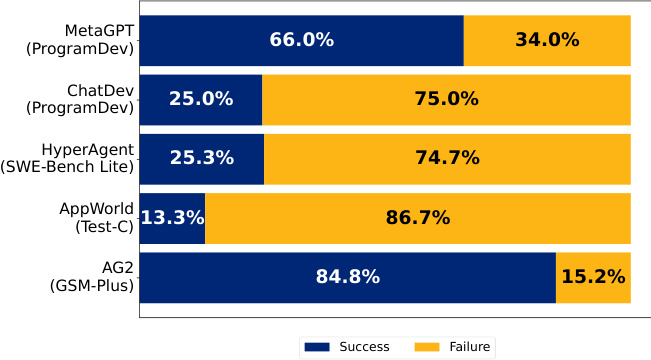
INTRODUCTION In recent years, multi-intelligent systems (MAS) have attracted much attention in the field of artificial intelligence. These systems attempt to solve complex, multi-step tasks through the collaboration of multiple Large Language Model (LLM) intelligences. However, despite the high expectations of MAS, their performance in real-world applications has been unsatisfactory. Compared to single-intelligent-body frameworks, MA ...

Large Language Models (LLMs) like Claude are not created by humans writing program code; they are trained on massive amounts of data. In the process, the models learn their own strategies for solving problems. These strategies are hidden in the billions of computations the model performs to generate each word, and for developers, the inner workings of these...
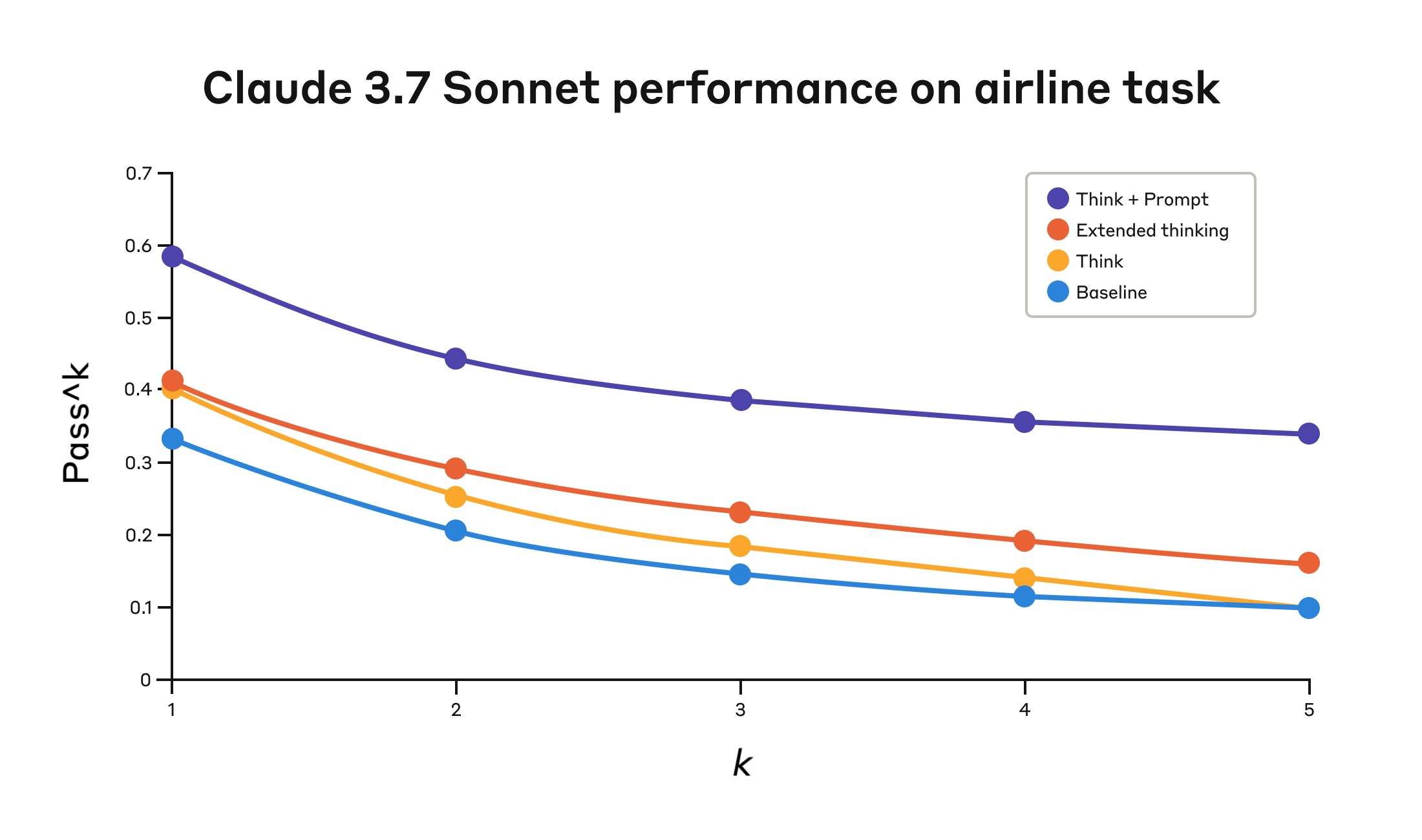
Recently, Anthropic has introduced a new tool called "think", which is designed to enhance the capabilities of the Claude model for complex problem solving. In this paper, we will take a closer look at the design concept, performance, and practical application of the "think" tool...

Abstract Information retrieval systems are critical for efficient access to large document collections. Recent approaches utilize Large Language Models (LLMs) to improve retrieval performance through query augmentation, but typically rely on expensive supervised learning or distillation techniques that require significant computational resources and manually labeled data. In this paper, we present DeepRetrie ...

Large reasoning models exploit vulnerabilities when given the opportunity. Research has shown that these exploits can be detected by using large language models (LLMs) to monitor their chains-of-thought (CoT). Punishing models for “bad thoughts” does not prevent most misbehavior, but rather allows them to hide their intentions. Read the paper (ope...
![[转载]QwQ-32B 的工具调用能力及 Agentic RAG 应用](https://www.kdjingpai.com/wp-content/uploads/2025/03/b04be76812d1a15.jpg)
Background A recent paper entitled Search-R1: Training LLMs to Reason and Leverage Search Engines with Reinforcement Learning (arxiv.org/pdf...

The GraphRAG project aims to extend the range of questions that AI systems can answer on private datasets by exploiting implicit relationships in unstructured text. A key advantage of GraphRAG over traditional vector RAG (or “semantic search”) is its ability to answer global queries over the entire dataset, such as “what are the main ...

If you have already read Jina's last classic article "Design and Implementation of DeepSearch/DeepResearch", then you may want to dig deeper into some details that can significantly improve the quality of answers. This time, we will focus on two details: extracting optimal text segments from long web pages: how to utilize late-chunk...

Gemma 3 Key Information Summary I. Key Metrics Parameters Details Model size 100 million to 27 billion parameters in four versions: 1B, 4B, 12B, 27B Architecture Transformer-based decoder-specific architecture inherited from Gemma 2 with several improvements Multimodal capabilities Support...

1. Background and Issues With the rapid development of Artificial Intelligence (AI) technologies, especially the advancement of diffusion modeling, AI has been able to generate very realistic portrait images. For example, technologies like InstantID require only one photo to generate multiple new images with the same identity features. This technique has many application scenarios though, such as creating...

NoLiMA, released in February 2025, is a Large Language Model (LLM) method for assessing long text comprehension. Unlike traditional Needle-in-a-Haystack (NIAH) tests that rely on keyword matching, it is characterized by the careful design of questions and key information,...

The field of generative AI is currently evolving rapidly, with new frameworks and technologies emerging. Therefore, readers should be aware that the content presented in this article may be current. In this article, we will take a deep dive into the two dominant frameworks for building LLM applications, LangChain and LangGraph, and analyze their strengths and weaknesses to help you choose the most suitable...

Understanding the three key concepts of MCP Server, Function Call, and Agent is essential in the burgeoning field of Artificial Intelligence (AI), especially Large Language Modeling (LLM). They are the cornerstones of an AI system, and each has a unique and interrelated role to play. In-depth...

Introduction Have you ever wondered how the chatbots we use today, such as OpenAI's models, determine whether a question is safe and should be answered? In fact, these Large Reasoning Models (LRMs) already have the ability to perform safety checks, which...
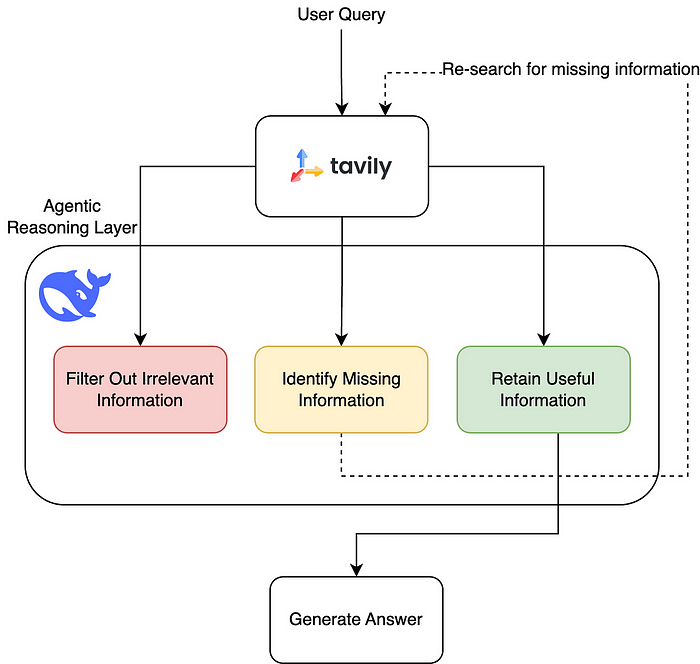
Recently found an open source project, it provides a good RAG ideas, it will DeepSeek-R1 reasoning ability combined with Agentic Workflow applied to RAG retrieval Project address https://github.com/deansaco/r1-reas...

In recent years, the field of Artificial Intelligence has made significant progress in its reasoning capabilities. After OpenAI demonstrated the powerful inference potential of large-scale language models (LLMs) last year, organizations such as Google DeepMind, Alibaba, DeepSeek, and Anthropic have been quick to follow suit, using reinforcement learning (RL...

In recent years, with the rapid development of large-scale language modeling (LLM), the capability of Multi-Agent Systems (MAS) has been significantly improved. These systems are not only capable of automating tasks, but also exhibit near-human reasoning capabilities. However, traditional MAS architectures are often accompanied by complex code real ...
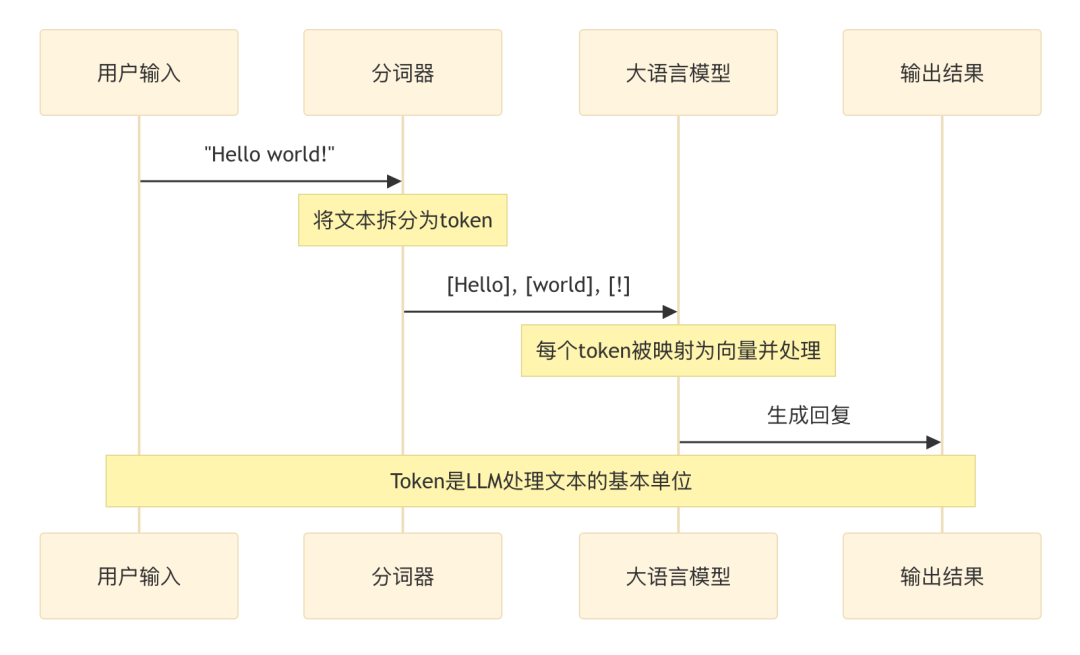
Large-scale language modeling (LLM) is playing an increasingly important role in the field of artificial intelligence. In order to better understand and apply LLMs, we need to gain a deeper understanding of their core concepts. In this paper, we will focus on three key concepts, namely Token, Maximum Output Length, and Context Length, to help readers clear the understanding barriers so as to utilize LLM technology more effectively...
Recently, the terms Autonomous AI (AI), AI Agents, and Agents have been popping up frequently in the public eye. Frankly, even as data analysts and scientists, industry players have been a little confused about these AI-related trends and buzzwords in the past...
Top